
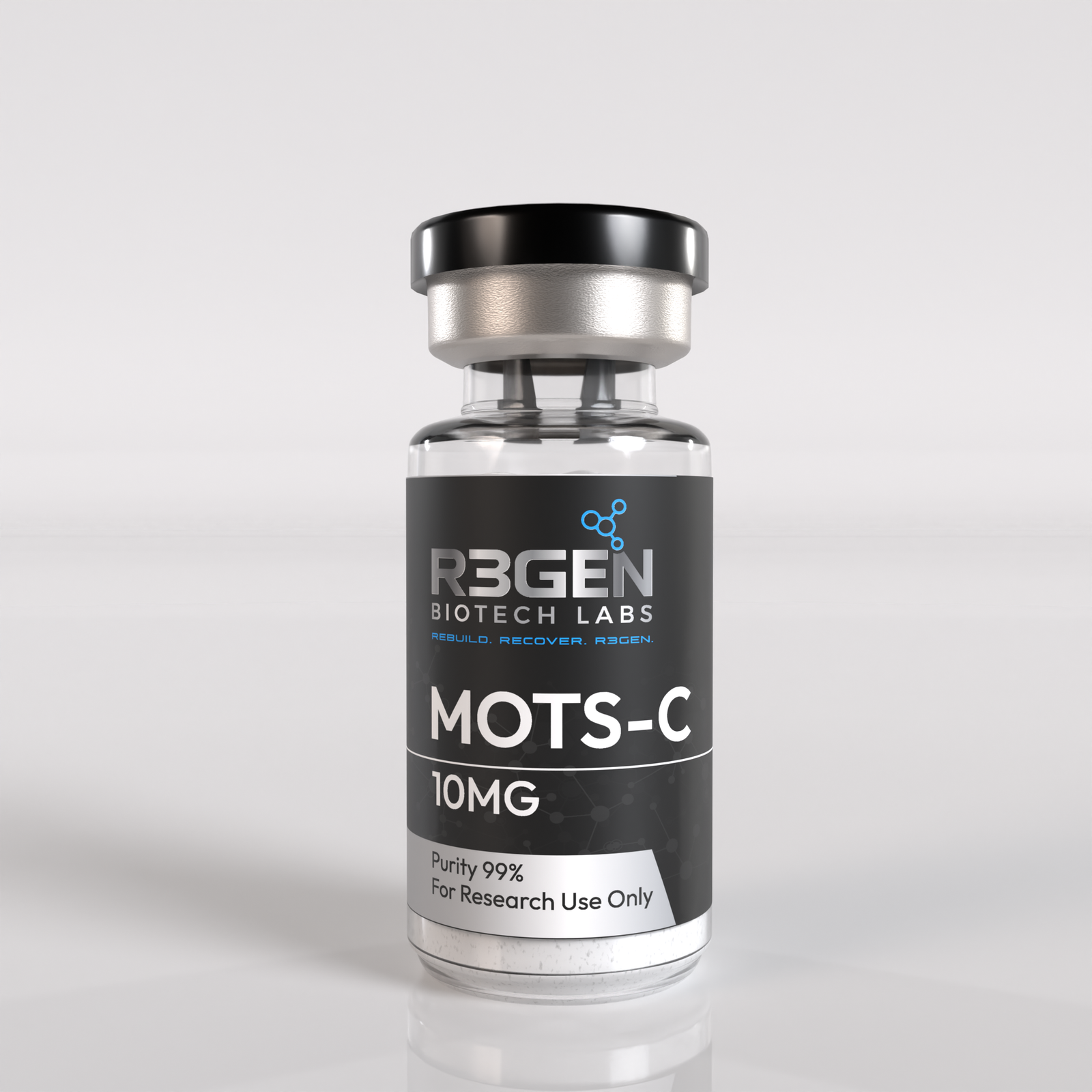
MOTS-C 10MG
MOTS-C (Mitochondrial-encoded Open Reading Frame Splice Variant C) is a short peptide derived from the mitochondrial genome. This research-use-only compound has garnered attention in scientific studies for its potential implications in cellular and metabolic research.
Key Research Focus Areas
- Supports metabolism, energy production, and endurance
- Studied for mitochondrial and insulin sensitivity pathways
Research Context
MOTS-C has emerged as a subject of interest in the field of mitochondrial biology and bioenergetics. Initially identified through large-scale sequencing efforts, this peptide is hypothesized to play a role in mitochondrial function, stress responses, and cellular homeostasis. While its precise mechanisms remain under investigation, MOTS-C has been implicated in studies examining metabolic adaptation, muscle physiology, and aging research.
Research Overview
Research investigating MOTS-C has primarily focused on its potential signaling functions within mitochondria and its effects on cellular energetics. Early studies have suggested that MOTS-C may influence pathways related to oxidative stress resistance and mitochondrial biogenesis. Due to its origin from a mitochondrial open reading frame, its investigation is particularly relevant for researchers studying mitochondrial dysfunctions, metabolic disorders, and aging processes.
Safety and Handling Considerations
This product is intended solely for use in academic or research institutions under the direct supervision of qualified personnel. Due to its novel nature, safety profiles are not yet fully characterized. Researchers must adhere to established laboratory protocols, including proper handling, storage, and disposal procedures.
While early studies suggest potential implications for mitochondrial biology, no therapeutic claims are supported by available data. It is imperative to conduct research in compliance with institutional guidelines and regulatory requirements.
Compliance Notice
For research use only. Not for human or animal consumption. Always consult with your institution’s research compliance officers or regulatory authorities before conducting any experimental use.

Reviews
There are no reviews yet.